FIPFG vs Silicone Overmolding: Understanding Shore Hardness, Material Systems, and Real Engineering Selection

In sealing engineering, one of the most common misunderstandings is assuming that all “soft materials” can be compared directly by hardness values alone.
A customer may request:
- “Shore A 60 gasket”
- “Soft foam sealing”
- “IP67 sealing solution”
- “Automatic gasket dispensing”
At first glance, these requirements may appear related. However, in reality, they may belong to completely different material systems, hardness scales, manufacturing technologies, and engineering philosophies.
This is especially true when comparing:
- FIPFG (Foam-In-Place Formed Gasket)
- Silicone overmolded gaskets
- Solid rubber gaskets
- Polyurethane elastomer systems
Many engineers and sourcing teams mistakenly compare these technologies only by Shore hardness values. This often leads to incorrect material selection, unstable sealing performance, or unrealistic expectations.
This article aims to provide a complete engineering-level understanding of:
- What Shore hardness really means
- Why Shore 00 and Shore A are different systems
- Why FIPFG usually uses Shore 00
- Why silicone overmolding usually uses Shore A
- Whether FIPFG can replace silicone gaskets
- Why hardness alone is not enough for gasket selection
- How industry applications determine the correct process
The goal is not only to explain the materials, but also to build a logical framework for proper gasket engineering selection.
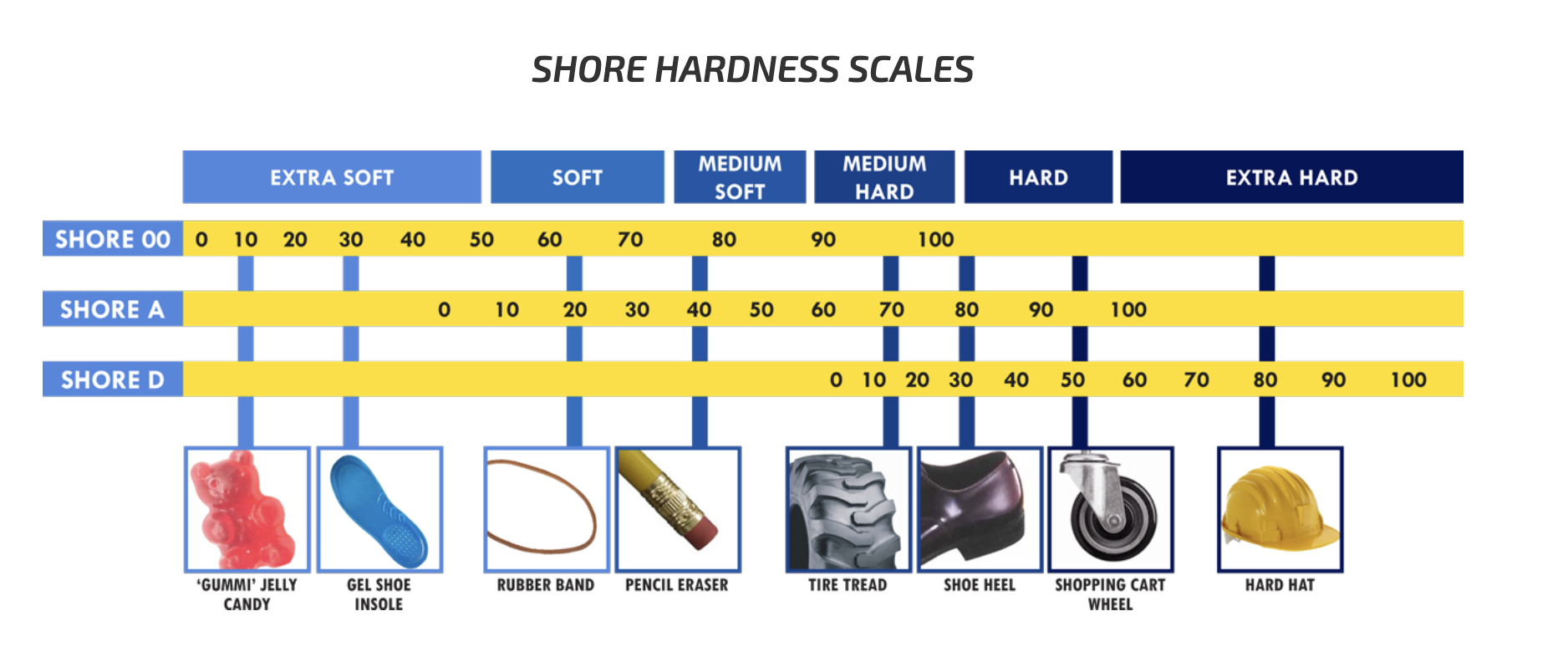
1. Understanding Shore Hardness Systems
1.1 What is Shore Hardness?
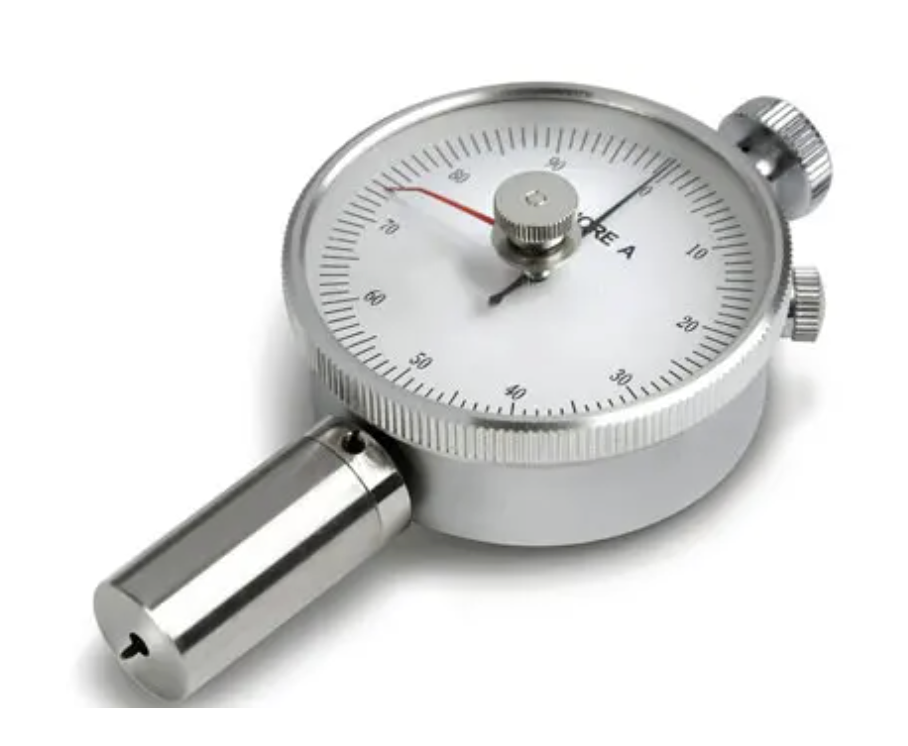
Shore hardness is a measurement of a material’s resistance to indentation.
Different Shore scales exist because soft materials vary enormously in behavior.
For example:
- A sponge
- A silicone rubber gasket
- A TPU wheel
- A rigid polyurethane block
All are technically polymers or elastomers, but their mechanical behaviors are completely different.
As a result, different Shore scales were developed.
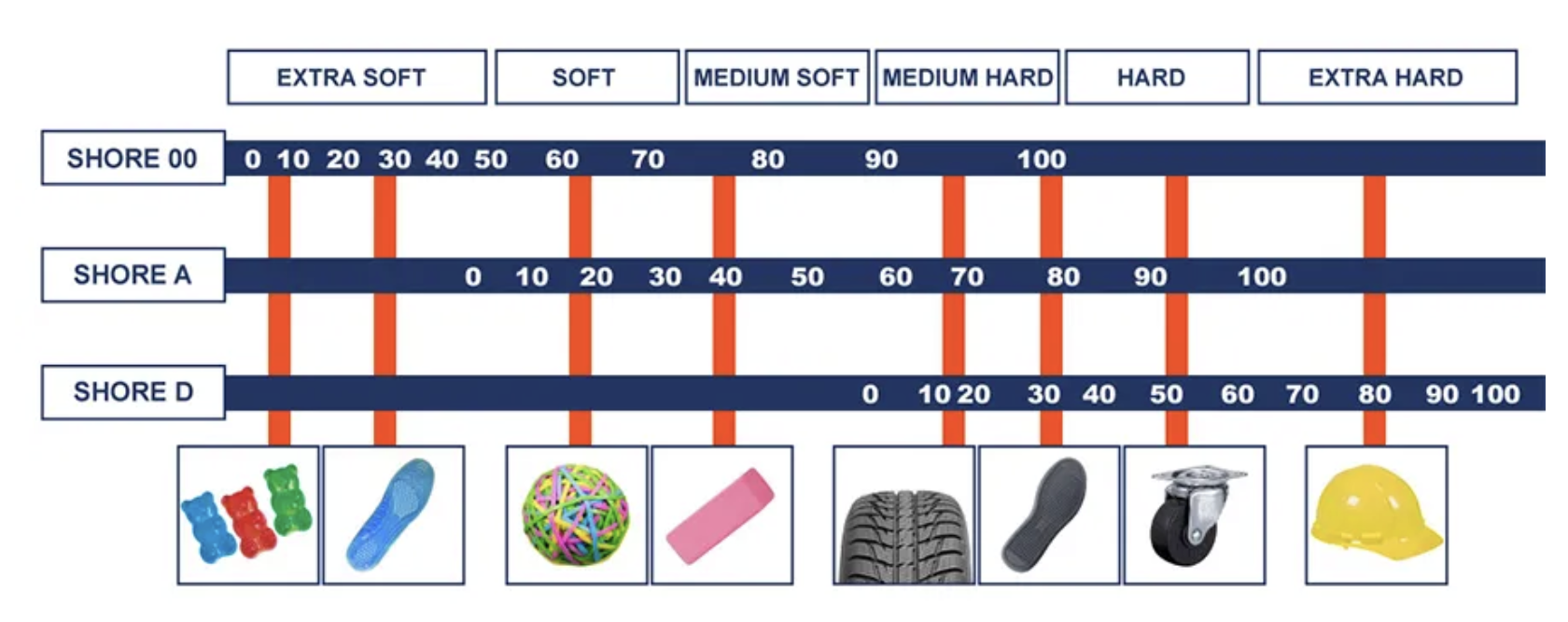
2. Main Shore Hardness Systems
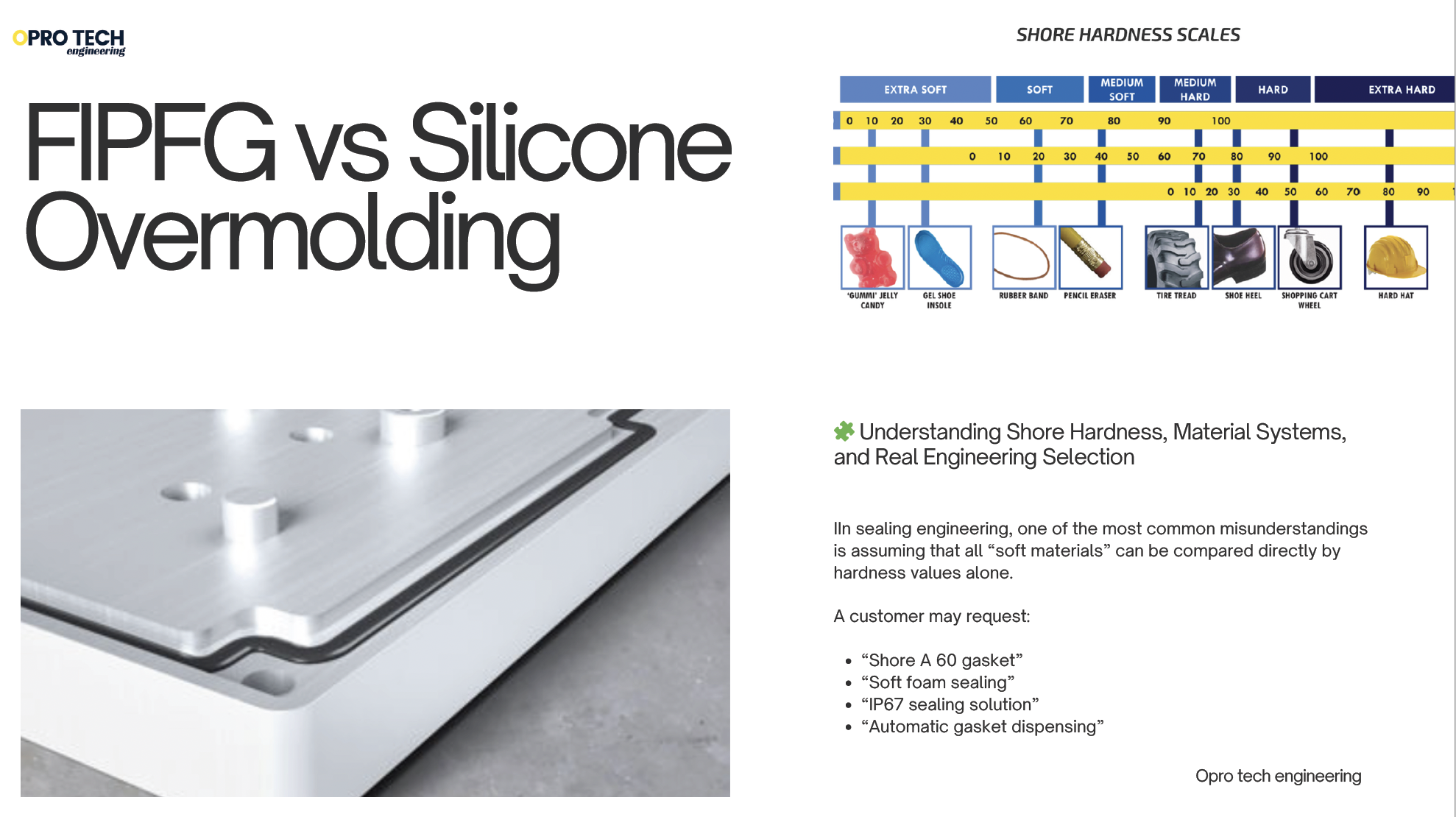
2.1 Shore 00
Shore 00 is designed for extremely soft materials.
Typical applications:
- PU foam
- Gel materials
- Soft sponge structures
- FIPFG foam gaskets
- Cushioning foams
Typical feel:
Shore 00 | Material Feel |
10–20 OO | Extremely soft foam |
20–40 OO | Soft sealing foam |
40–70 OO | Medium-density foam |
70–90 OO | Dense microcellular foam |
Shore 00 is commonly used in foam-based sealing systems because these materials rely on compressibility and recovery.
2.2 Shore A
Shore A is used for solid elastomers and rubbers.
Typical applications:
- Silicone rubber
- EPDM
- TPU
- Solid polyurethane elastomers
- Injection molded seals
- Overmolded gaskets
Typical feel:
Shore A | Material Feel |
10–20 A | Very soft rubber |
30–40 A | Flexible gasket rubber |
50–60 A | Standard industrial sealing rubber |
70–80 A | Hard structural elastomer |
90 A+ | Near-rigid rubber |
Shore A materials behave more like solid elastic bodies rather than compressible foams.
2.3 Shore D
Shore D is for hard plastics and rigid elastomers.
Typical applications:
- Nylon
- Polycarbonate
- Hard polyurethane
- Engineering plastics
Examples:
Shore D | Material Type |
30–40 D | Semi-rigid PU |
50–70 D | Hard engineering elastomer |
70–85 D | Structural plastic |
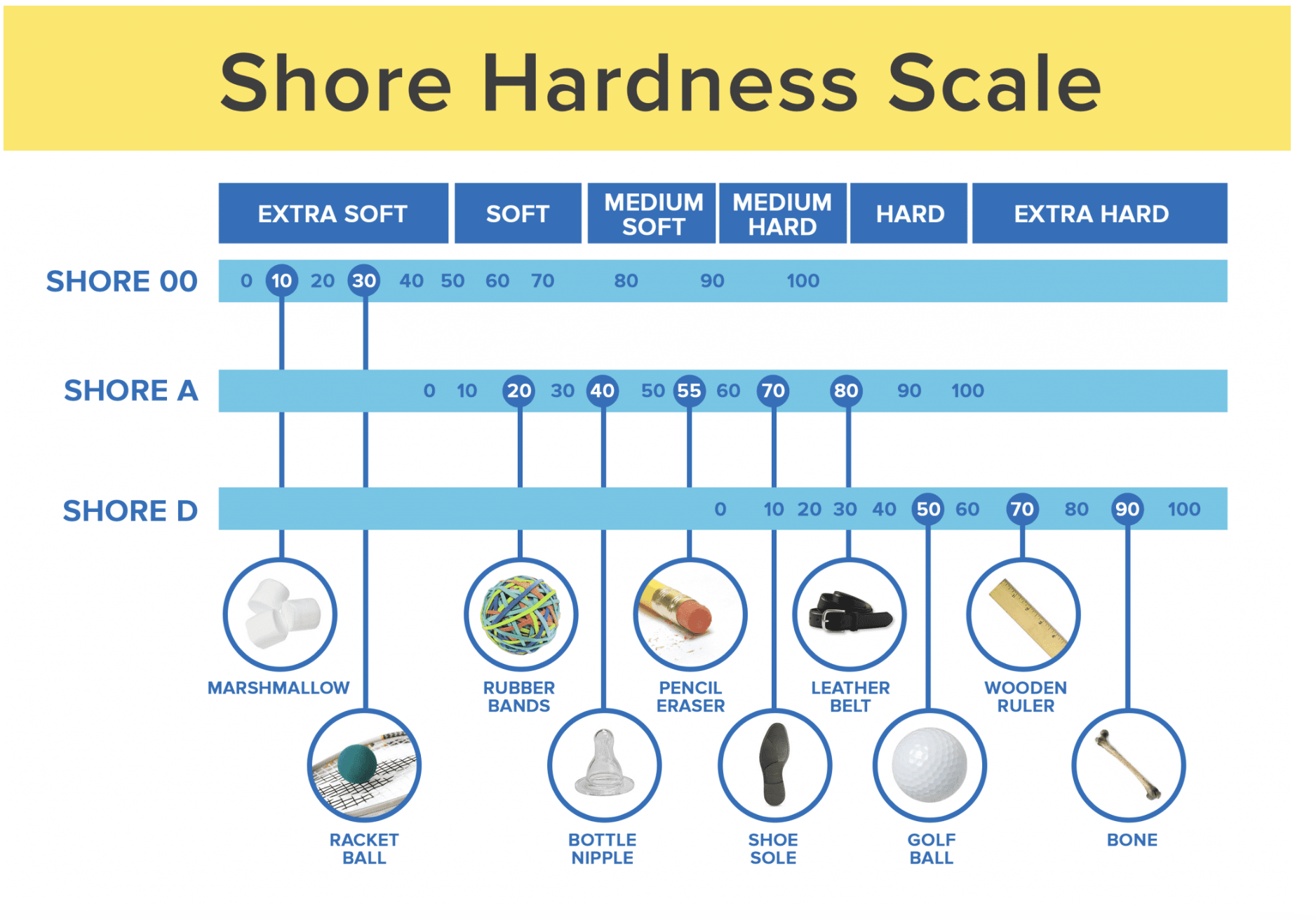
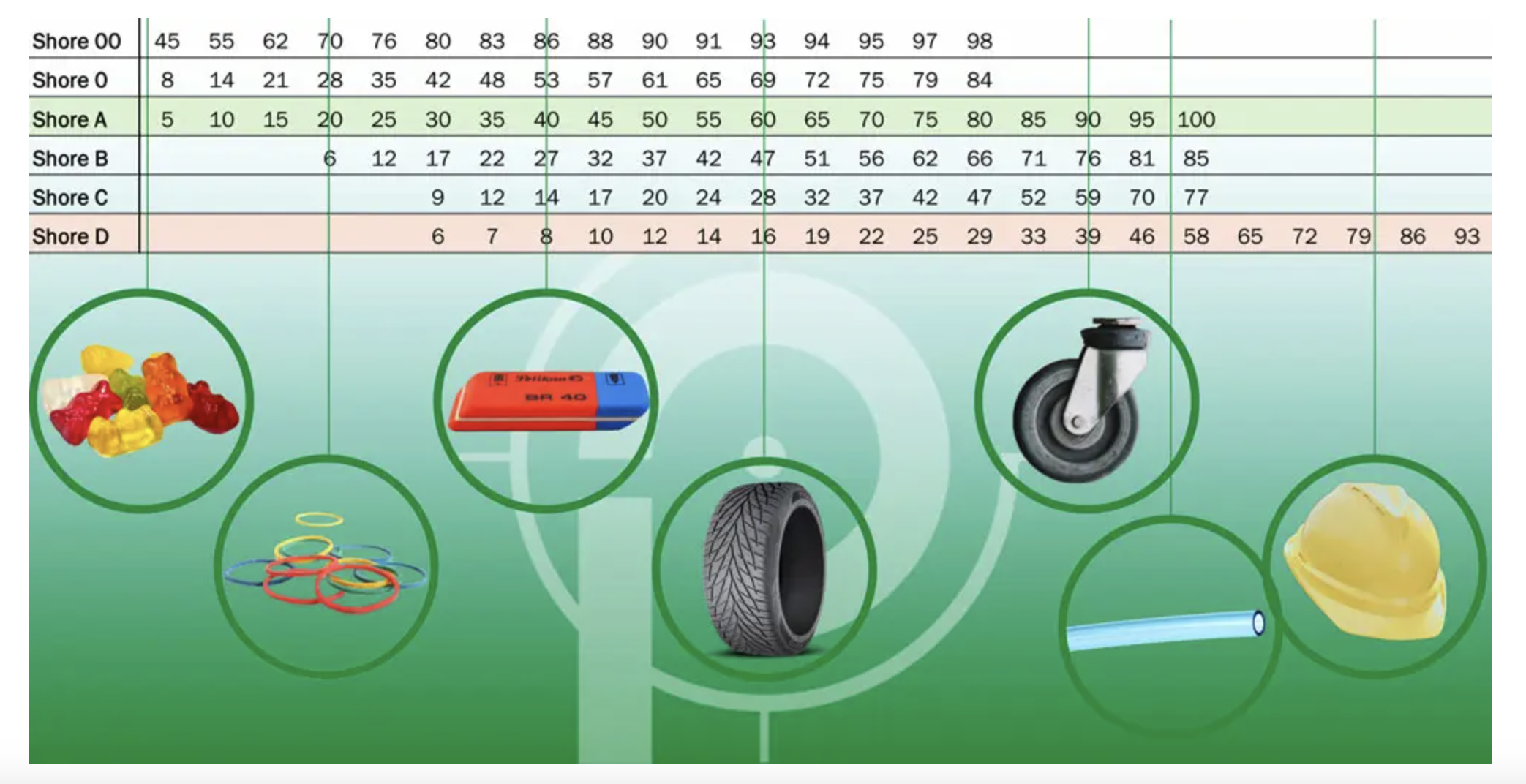
3. Why Shore 00 and Shore A Cannot Be Compared Directly
One of the biggest industry mistakes is attempting direct conversion between Shore 00 and Shore A.
Although approximate comparison charts exist, the relationship is NOT linear.
Why?
Because the material structures themselves are different.
For example:
- Shore 00 foam contains air cells
- Shore A rubber is mostly solid polymer
A foam with Shore 00 hardness may feel softer because it compresses internally through air pockets.
A Shore A silicone gasket behaves differently because the resistance comes from solid elastomer deformation.
This means:
- Similar hardness numbers do NOT mean similar performance
- Compression force differs
- Recovery behavior differs
- Long-term sealing differs
- Mechanical durability differs
Therefore:
A Shore A 60 silicone gasket is NOT equivalent to a Shore 00 60 foam gasket.
These are fundamentally different engineering systems.
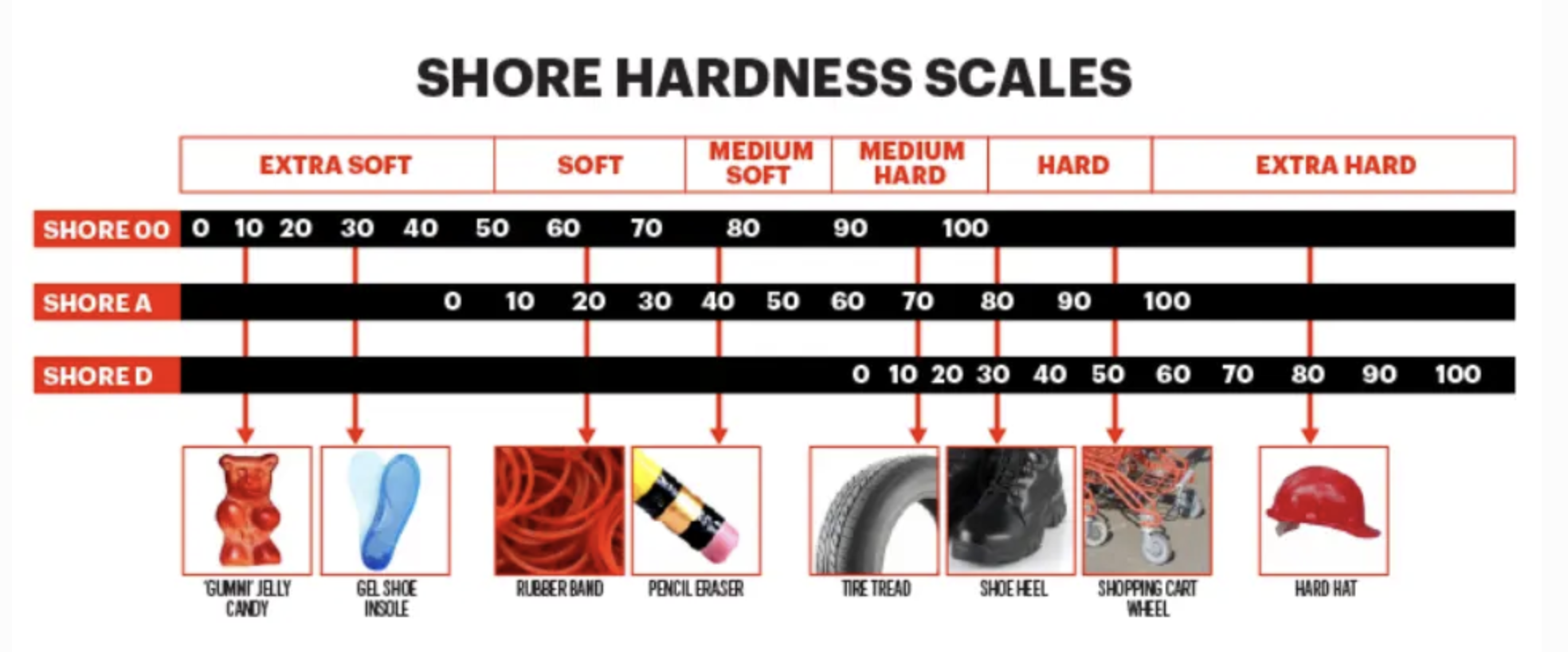
4. Understanding FIPFG Technology
4.1 What is FIPFG?
FIPFG stands for:
Foam-In-Place Formed Gasket.
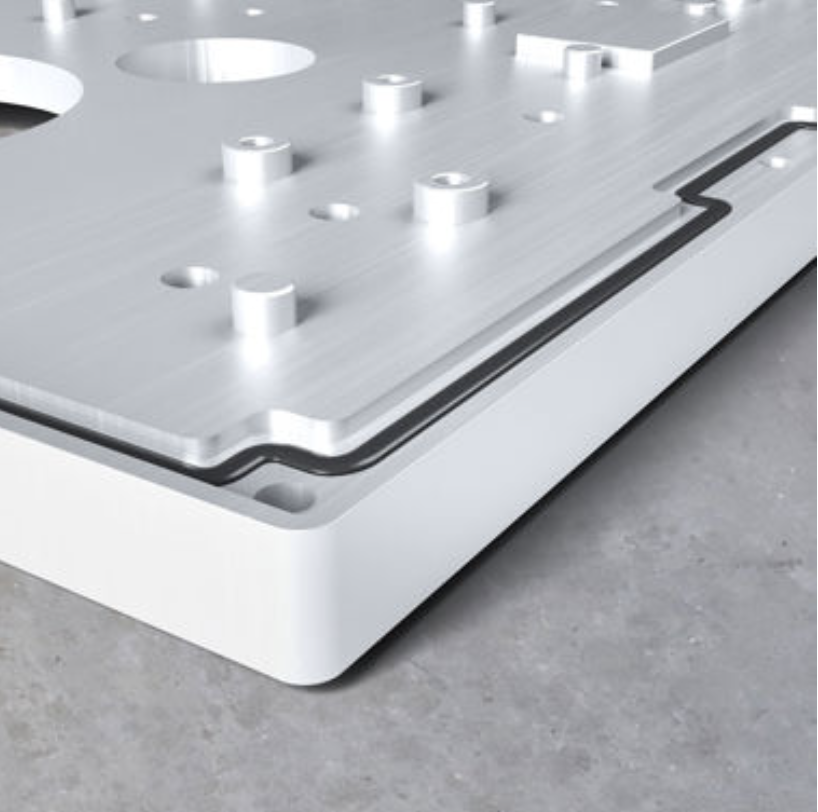
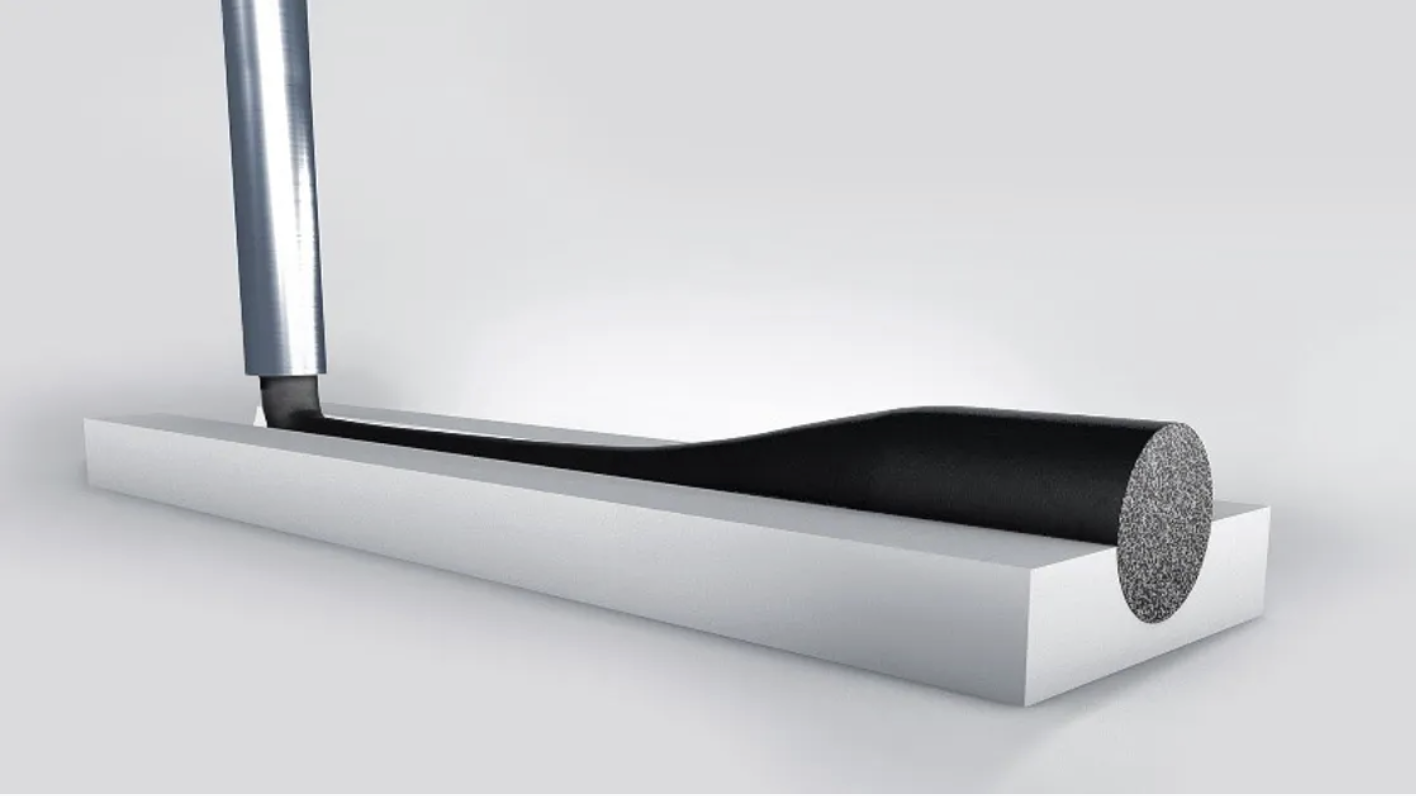
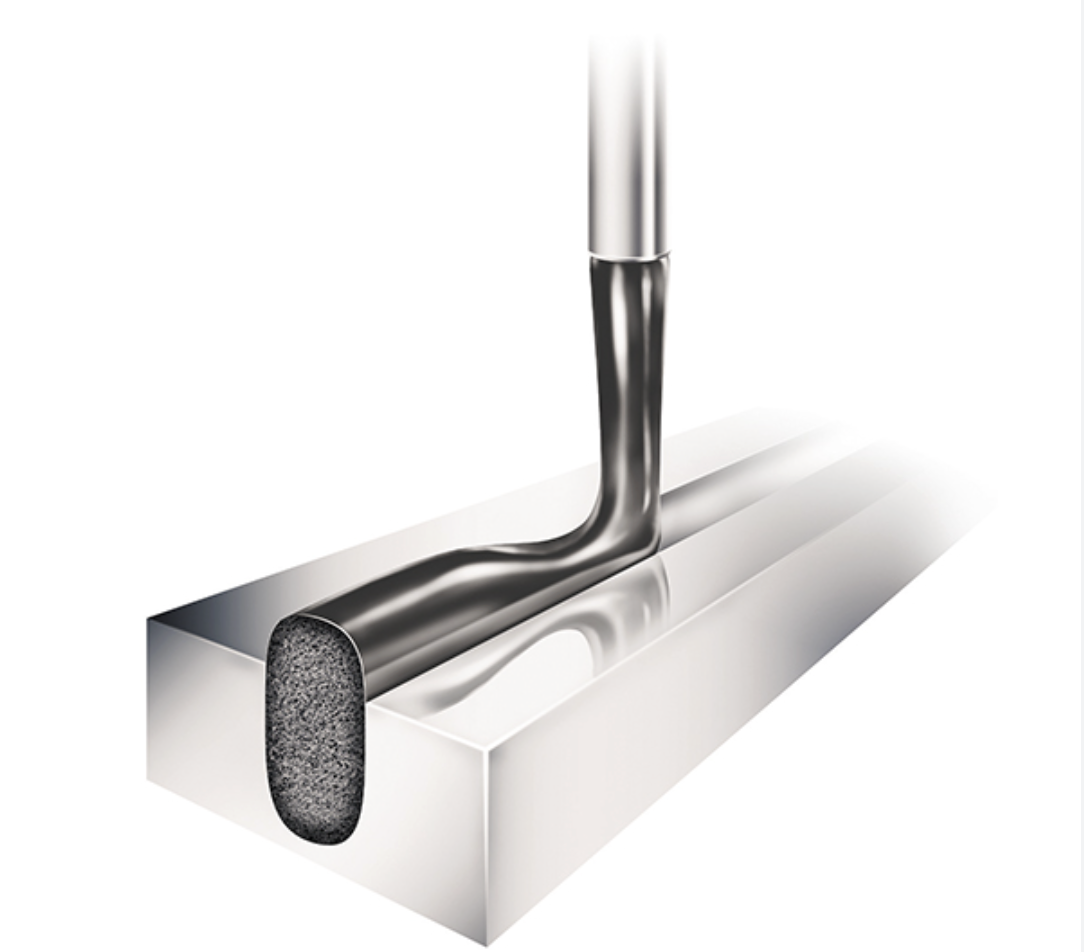
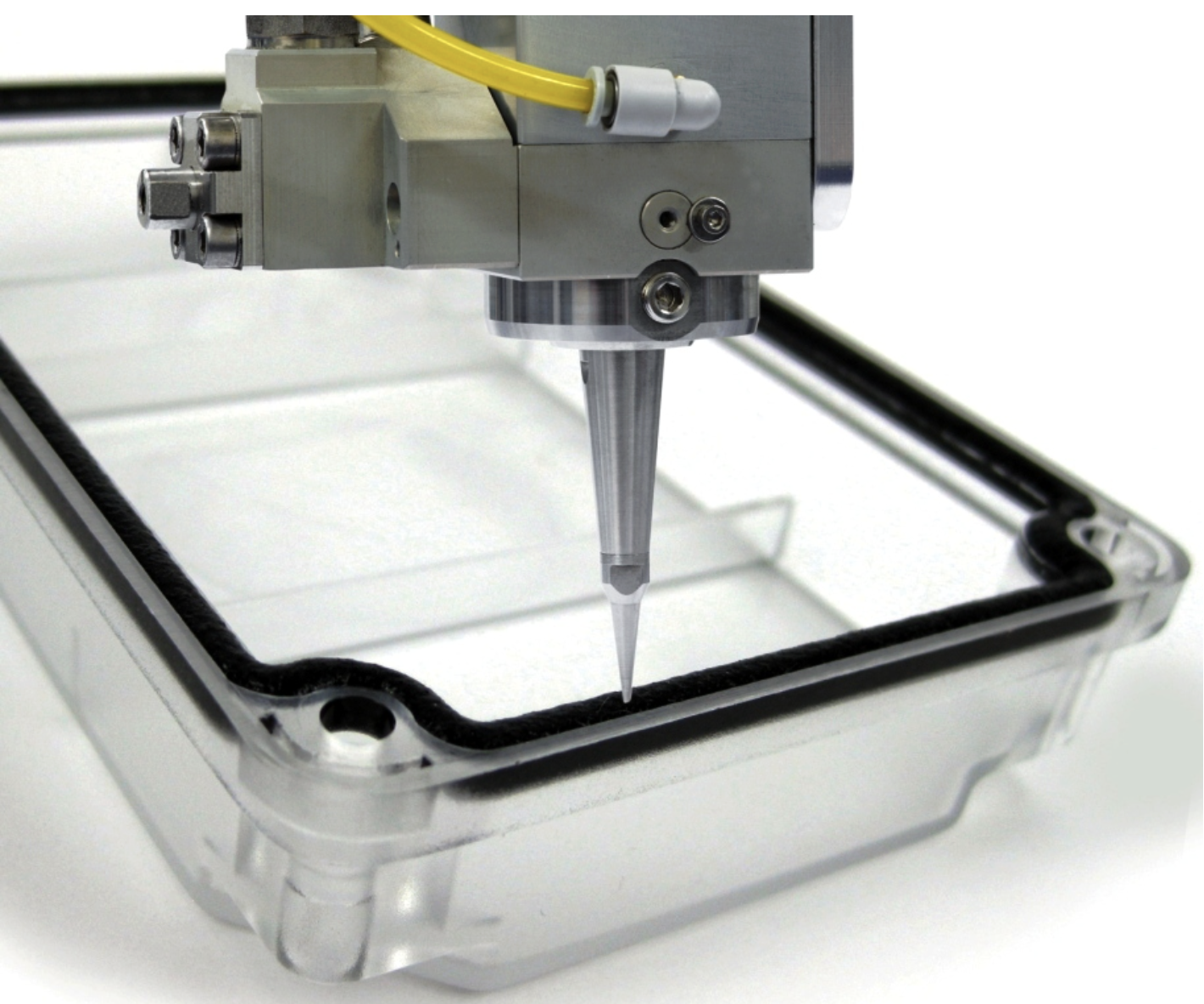
This is an automated dispensing technology where a reactive two-component material is mixed and deposited directly onto a substrate.
The material expands during curing and forms a foam sealing bead.
Typical materials:
- Polyurethane foam (PU foam)
- Silicone foam
4.2 Core Characteristics of FIPFG
FIPFG is designed around:
- Compressibility
- Gap filling
- Automated dispensing
- Lightweight foam structure
- IP sealing
Typical applications:
- Electrical enclosures
- Automotive electronics
- LED housings
- Battery covers
- HVAC sealing
- Industrial cabinets
4.3 Typical Hardness of FIPFG
Most FIPFG systems are measured using Shore 00.
Typical industrial range:
FIPFG Type | Typical Hardness |
Ultra-soft foam | 5–20 Shore 00 |
Standard sealing foam | 20–50 Shore 00 |
High-density foam | 50–90 Shore 00 |
Even dense FIPFG systems usually remain foam-based.
This is extremely important.
The sealing philosophy of FIPFG depends on:
- Compression
- Foam recovery
- Surface adaptation
If the foam becomes too hard, sealing performance may actually decrease.
5. Silicone Overmolding Gaskets
5.1 What is Silicone Overmolding?
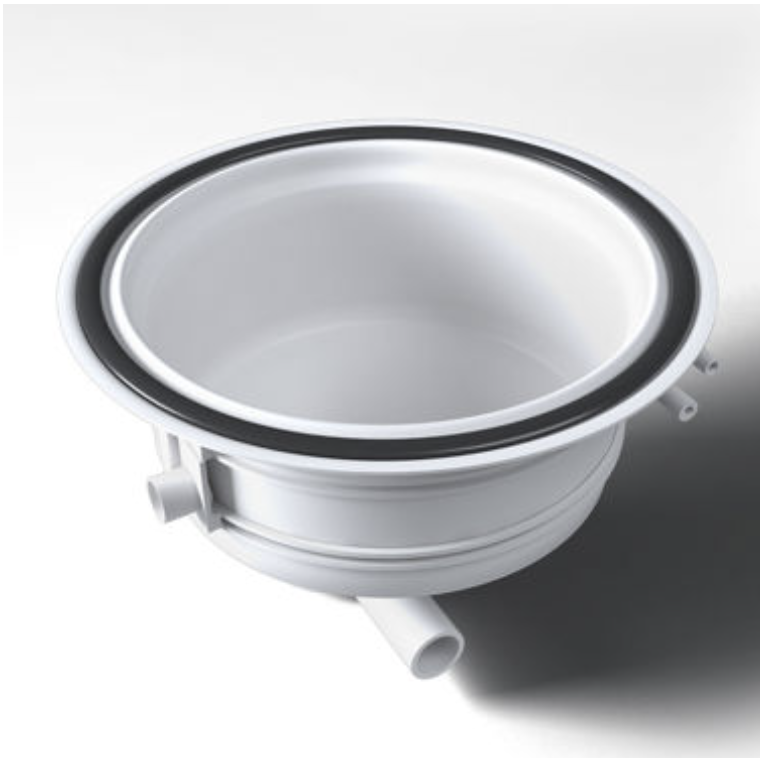
Silicone overmolding is a process where silicone rubber is molded directly onto a plastic or metal substrate.
Typical materials:
- LSR (Liquid Silicone Rubber)
- Solid silicone rubber
The gasket becomes an integrated part of the product.
5.2 Typical Hardness of Silicone Gaskets
Silicone gaskets are typically measured using Shore A.
Common industrial ranges:
Silicone Type | Typical Hardness |
Ultra-soft silicone | 10–20 Shore A |
Standard sealing silicone | 30–50 Shore A |
Structural sealing silicone | 50–70 Shore A |
Hard silicone | 70–80 Shore A |
Shore A 60 is very common in industrial silicone applications.
5.3 Why Silicone Uses Shore A Instead of Shore 00
Because silicone overmolding typically creates:
- Solid elastomer structures
- Non-foam rubber systems
- Mechanically stable sealing features
Unlike FIPFG:
- Silicone does not rely on foam compression
- Silicone relies on elastic deformation of solid rubber
Therefore Shore A is the correct scale.
6. Can FIPFG Replace Silicone Overmolded Gaskets?
This is one of the most important engineering questions.
The answer is:
Sometimes yes. Sometimes no.
And hardness alone cannot determine the answer.
7. Why Hardness Alone Is Not Enough
Many sourcing teams ask:
“If both materials have similar hardness, can they replace each other?”
This is usually incorrect.
Gasket selection depends on many factors:
- Compression behavior
- Compression set
- Recovery force
- Temperature resistance
- Chemical resistance
- UV resistance
- Long-term aging
- Tolerance compensation
- Surface flatness
- Dynamic vs static sealing
- Mechanical loading
- IP requirements
- Assembly force
Two materials with similar hardness may behave completely differently in real applications.
8. When FIPFG Is the Better Choice
FIPFG is excellent when:
- Automated dispensing is needed
- Complex gasket paths exist
- Lightweight sealing is preferred
- Large tolerance compensation is required
- Low compression force is needed
- IP54–IP67 sealing is sufficient
- Production efficiency is critical
Typical industries:
- Electrical cabinets
- Automotive electronics
- Consumer electronics
- LED systems
- HVAC systems
- Battery enclosures
Advantages:
- No separate gasket assembly
- High automation
- Flexible geometry
- Excellent tolerance compensation
- Lower assembly complexity
9. When Silicone Overmolding Is Better
Silicone overmolding is better when:
- Mechanical durability is critical
- High Shore A hardness is required
- Long-term compression stability is needed
- High temperature resistance is required
- Chemical resistance is important
- Structural sealing exists
- Repeated compression cycles occur
- Outdoor durability is required
Typical industries:
- Medical devices
- Automotive connectors
- Waterproof consumer electronics
- Industrial equipment
- Aerospace components
- Harsh environment sealing
Advantages:
- Stable Shore A hardness
- Excellent aging resistance
- Strong mechanical integrity
- Excellent thermal resistance
- Better long-term reliability
10. The Hidden Engineering Difference: Foam vs Solid Elastomer
This is the most important concept in the entire discussion.
FIPFG and silicone overmolding are not simply “different hardnesses.”
They are different mechanical systems.
FIPFG:
- Foam-based
- Air-cell structure
- Compression-oriented
- Gap-filling behavior
- Lower sealing force
Silicone Overmolding:
- Solid elastomer
- Rubber deformation
- Structural elasticity
- Higher mechanical stability
- Higher durability
This difference affects:
- Assembly force
- Recovery behavior
- Compression set
- Sealing lifetime
- Environmental resistance
- Mechanical performance
11. Real Engineering Example
Imagine a customer requests:
“Shore A 60 gasket for an outdoor waterproof enclosure.”
At first glance, a supplier may attempt to increase FIPFG density to approach higher hardness.
However:
- The foam becomes denser
- Compressibility decreases
- Recovery force changes
- Long-term sealing stability may decrease
Eventually, the material may no longer behave like a proper foam gasket.
In this situation:
A Shore A 60 silicone overmolded gasket is usually the more reliable engineering solution.
12. Can High-Density FIPFG Reach Shore A Levels?
Some advanced polyurethane FIPFG systems can achieve:
- 60–90 Shore 00
- High-density microcellular structures
However:
This does NOT make them equivalent to Shore A 60 silicone.
The internal structure still differs.
High-density FIPFG remains:
- Foam-based
- Microcellular
- Compression-oriented
Silicone remains:
- Solid elastomer
- Structurally elastic
- Mechanically durable
This distinction is critical.
13. Industry Selection Logic
A good sealing engineer should never choose material based only on Shore hardness.
Instead, sealing material selection should follow a complete engineering logic, because the real performance of a gasket depends not only on hardness, but also on:
- Material structure
- Compression behavior
- Environmental resistance
- Production process
- Long-term reliability
- Application conditions
A foam gasket and a solid silicone gasket may sometimes feel similarly “soft” by hand, but in real applications they can behave completely differently.
Therefore, a professional sealing decision should always begin with the actual application requirements.
Step 1 — Define the Sealing Function
The first question should always be:
“What is this gasket actually required to do?”
Different sealing targets require completely different material behaviors.
Examples:
- Dust sealing
- Waterproof sealing (IP54 / IP65 / IP67 / IP68)
- Structural sealing
- Shock absorption
- Vibration damping
- Thermal insulation
- Acoustic sealing
For example:
- FIPFG foam systems are excellent for gap filling and low compression sealing.
- Silicone overmolded gaskets are better for stable mechanical sealing and repeated compression cycles.
Step 2 — Understand the Environmental Conditions
Even a well-designed gasket can fail if the working environment is ignored.
Important factors include:
- Temperature range
- UV exposure
- Humidity and water exposure
- Chemical resistance
- Outdoor aging
- Oil or solvent contact
For instance:
- Silicone usually performs extremely well under high temperature and UV exposure.
- Standard PU foam systems may age faster under harsh outdoor conditions.
The environment often determines whether FIPFG or silicone is the more reliable long-term solution.
Step 3 — Evaluate Mechanical Requirements
Mechanical behavior is one of the biggest differences between foam gaskets and solid elastomer gaskets.
Questions to consider:
- How much compression force is available?
- Will the enclosure be opened repeatedly?
- Is long-term compression stability required?
- Are there large dimensional tolerances?
- Is vibration involved?
FIPFG systems are excellent for:
- Tolerance compensation
- Uneven surfaces
- Low assembly force
Silicone overmolding is usually better for:
- Structural durability
- Repeated opening cycles
- Stable compression force
- Long-term mechanical reliability
Step 4 — Consider Manufacturing and Assembly Process
Material selection should also match the production strategy.
FIPFG is highly suitable for:
- Automated dispensing
- High-volume production
- Complex gasket paths
- Reduced manual assembly
Silicone overmolding is more suitable for:
- Premium integrated products
- Long-life sealing systems
- Harsh environmental applications
- Mechanically demanding products
In many cases, the manufacturing process itself becomes a key factor in selecting the sealing technology.
Step 5 — Evaluate Long-Term Reliability
A gasket should never be evaluated only by its initial appearance or hardness.
A professional sealing engineer should always consider:
- Compression set
- Aging behavior
- Thermal cycling
- Adhesion durability
- Material fatigue
- Long-term sealing stability
Two materials with similar hardness values may behave completely differently after years of real usage.
This is why real engineering validation is critical.
Step 6 — Validate Through Testing
Hardness comparison alone can never replace actual testing.
A proper sealing project should include validation such as:
- IP testing
- Compression testing
- Aging testing
- Thermal cycling
- Vibration testing
- Chemical resistance testing
Only through real testing can the true sealing performance be verified.
Final Engineering Perspective
One of the most important lessons in sealing engineering is this:
Hardness is only one parameter — not the final answer.
FIPFG and silicone overmolding are not simply “soft vs hard” materials.
They are fundamentally different engineering systems designed for different application philosophies.
FIPFG focuses on:
- Foam compression
- Gap compensation
- Automated sealing efficiency
Silicone overmolding focuses on:
- Solid elastomer behavior
- Mechanical durability
- Long-term environmental stability
Therefore, material selection should never rely only on Shore hardness comparison.
The better question is not:
“Which material is harder?”
But rather:
“Which material system is truly designed for this application?”
Once this mindset is understood, sealing design becomes far more logical, reliable, and engineering-driven.
And that is the foundation of professional gasket engineering.