Baffle vs. Bubbler Cooling in Injection Molds: How Do They Work and When Should You Use Them?

Understanding two common cooling solutions for deep and slender mold cores
In injection molding, cooling is more than simply circulating water through the mold. It is about removing heat efficiently and maintaining a relatively uniform temperature throughout the mold.
A well-designed cooling system helps reduce cycle time, improve dimensional stability, minimize warpage, and ensure consistent part quality.
However, conventional straight cooling channels cannot always reach every area of a mold, especially around deep cavities, slender cores, and complex geometries.
This is where special cooling structures such as Baffles and Bubblers come into play.
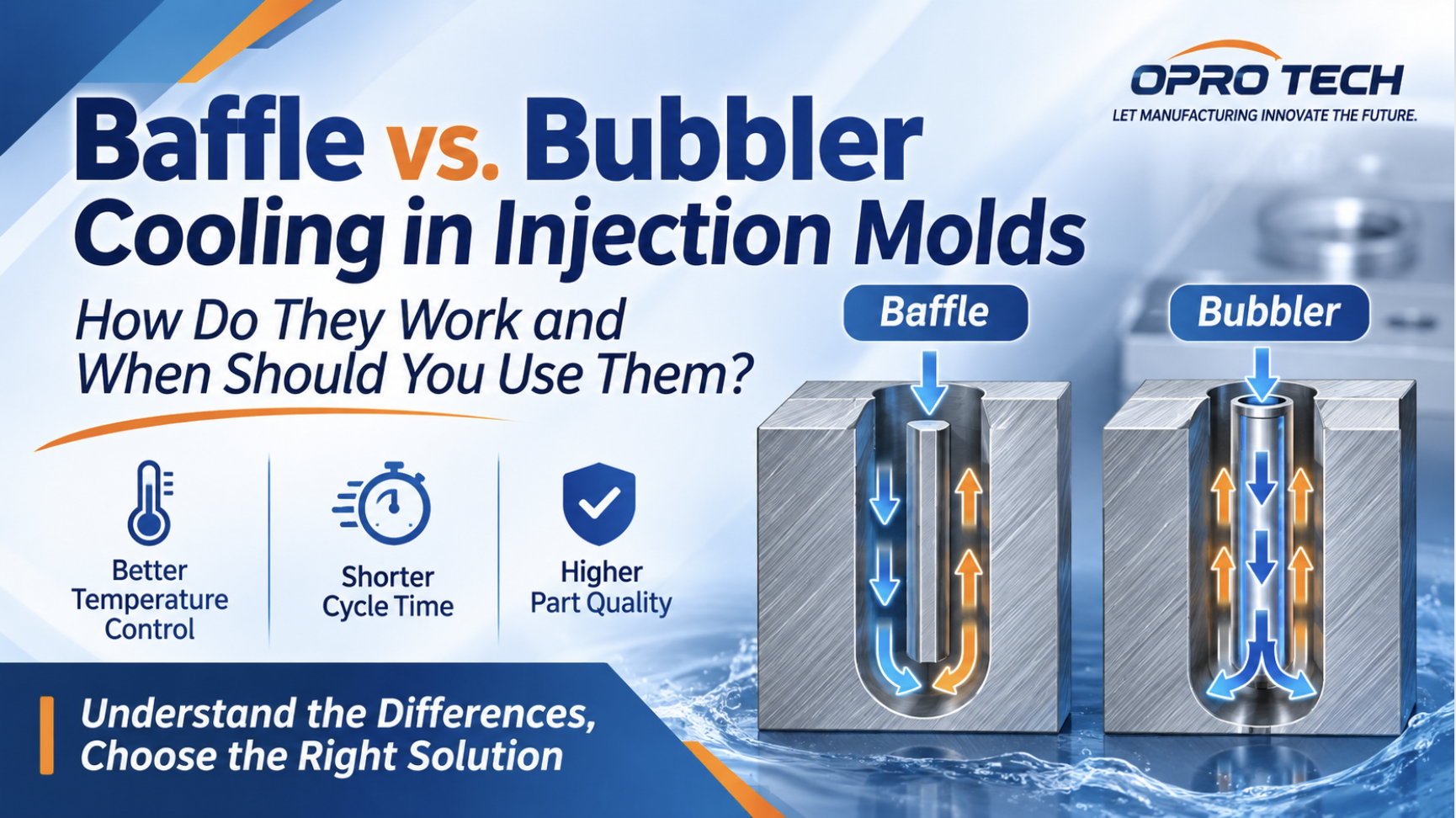
Although both are designed to bring coolant closer to areas that are difficult to cool, their structures and working principles are different.
Let's take a closer look.
1. Why Do We Need Baffles and Bubblers?
In a conventional injection mold, cooling channels are usually drilled through the cavity and core plates. Coolant flows through these channels, absorbs heat from the surrounding mold steel, and carries it away.
This works well for many standard mold designs.
However, some mold geometries create cooling challenges.
For example:
Deep and slender core pins may be difficult to cool using conventional channels.
Certain areas may be too far away from the main cooling channels.
Complex mold geometries may prevent cooling channels from being positioned close enough to the hottest areas.
Localized heat accumulation may lead to uneven mold temperatures.
When these situations occur, Baffles and Bubblers can help extend the cooling circuit into areas that conventional cooling channels cannot effectively reach.
Their main purpose is to improve heat removal and temperature uniformity within the mold.
2. What Is a Baffle Cooling System?
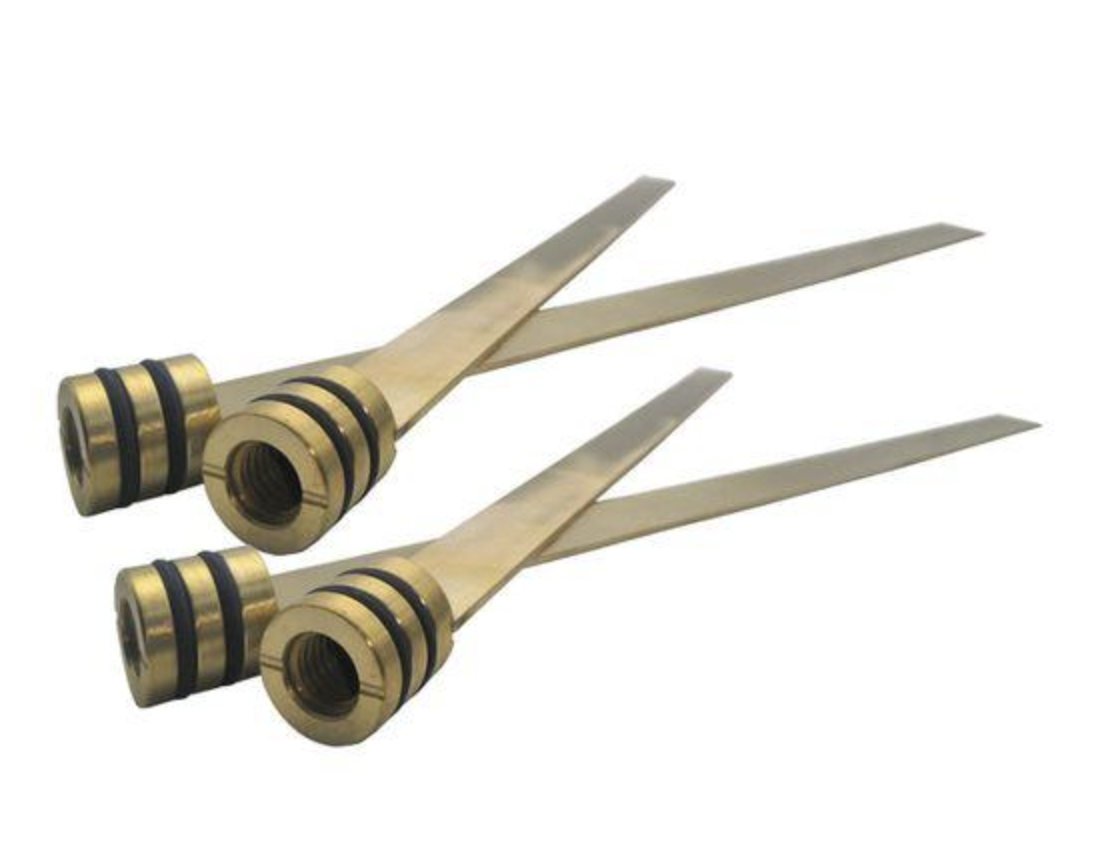
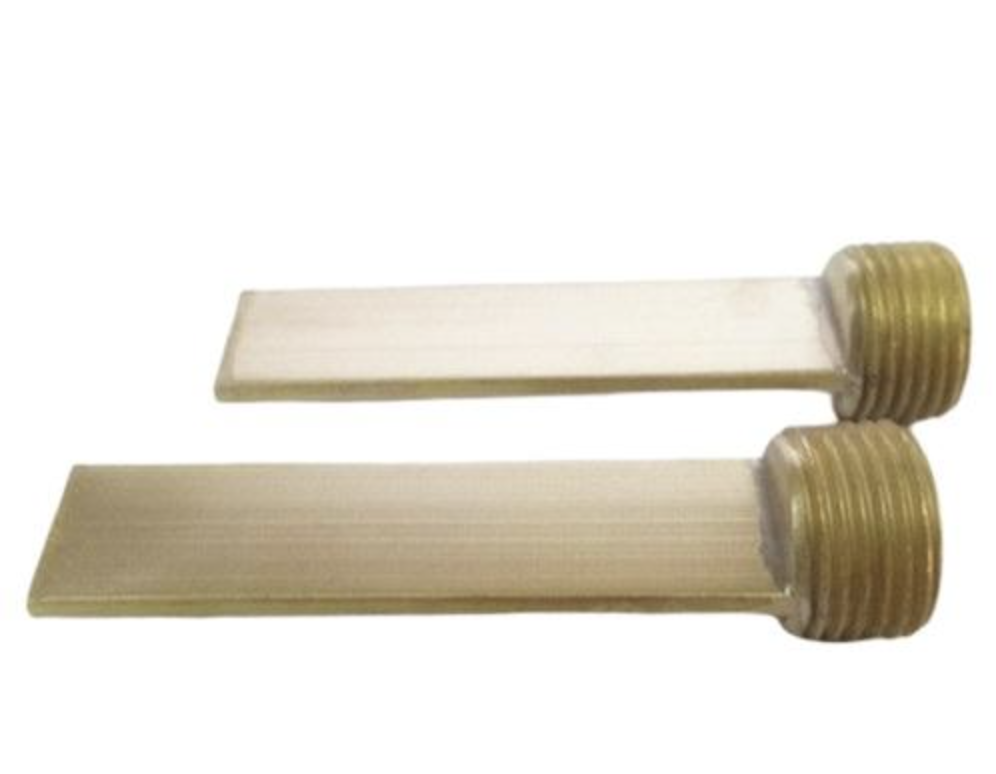
A Baffle is a thin metal plate or blade installed inside a drilled cooling hole.
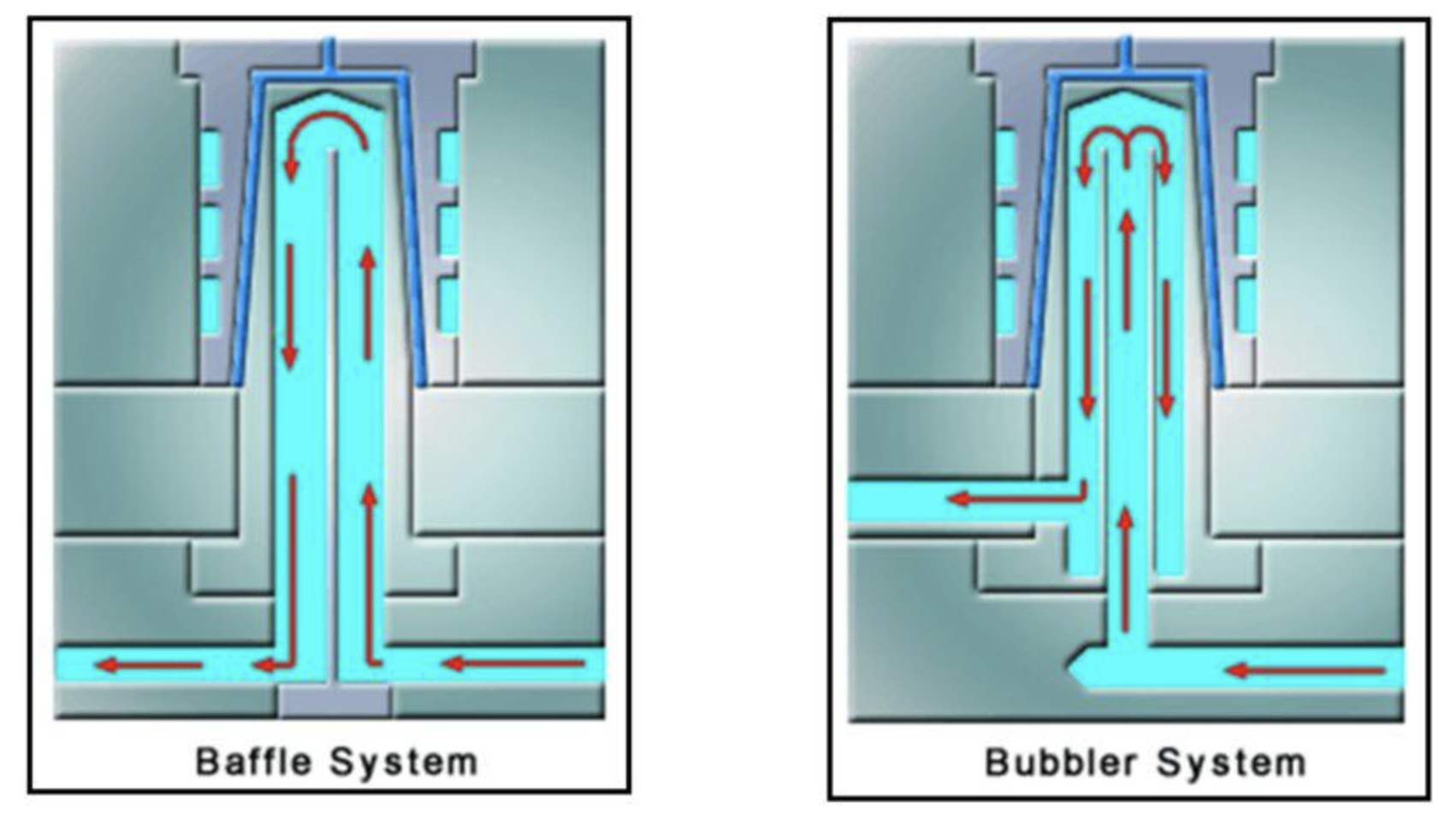
It divides the circular hole into two separate passages, creating a U-shaped coolant flow path.
How does it work?
The working principle is relatively simple:
Cold water enters one side of the cooling passage.
It travels along one side of the metal blade toward the deeper area of the mold.
At the end of the blade, the coolant changes direction.
It flows back through the opposite side of the passage.
The heated water returns to the main cooling circuit.
In this way, the Baffle directs coolant closer to areas that would otherwise be difficult to cool.
Why use a Baffle?
Baffles are particularly useful when a mold designer needs to extend cooling into deeper areas without creating two completely separate drilled channels.
They can help improve cooling around deep mold inserts and certain core structures.
However, there are some important design considerations:
Blade rigidity: The metal blade must be sufficiently rigid for its length and operating conditions.
Flow passage: The space on both sides of the blade must allow adequate coolant circulation.
Pressure drop: Because the blade reduces the available flow area, pressure loss can increase significantly.
Tip clearance: Sufficient space must be provided at the end of the blade to allow coolant to change direction.
A poorly designed Baffle may restrict coolant flow and reduce the overall cooling efficiency.
3. What Is a Bubbler Cooling System?
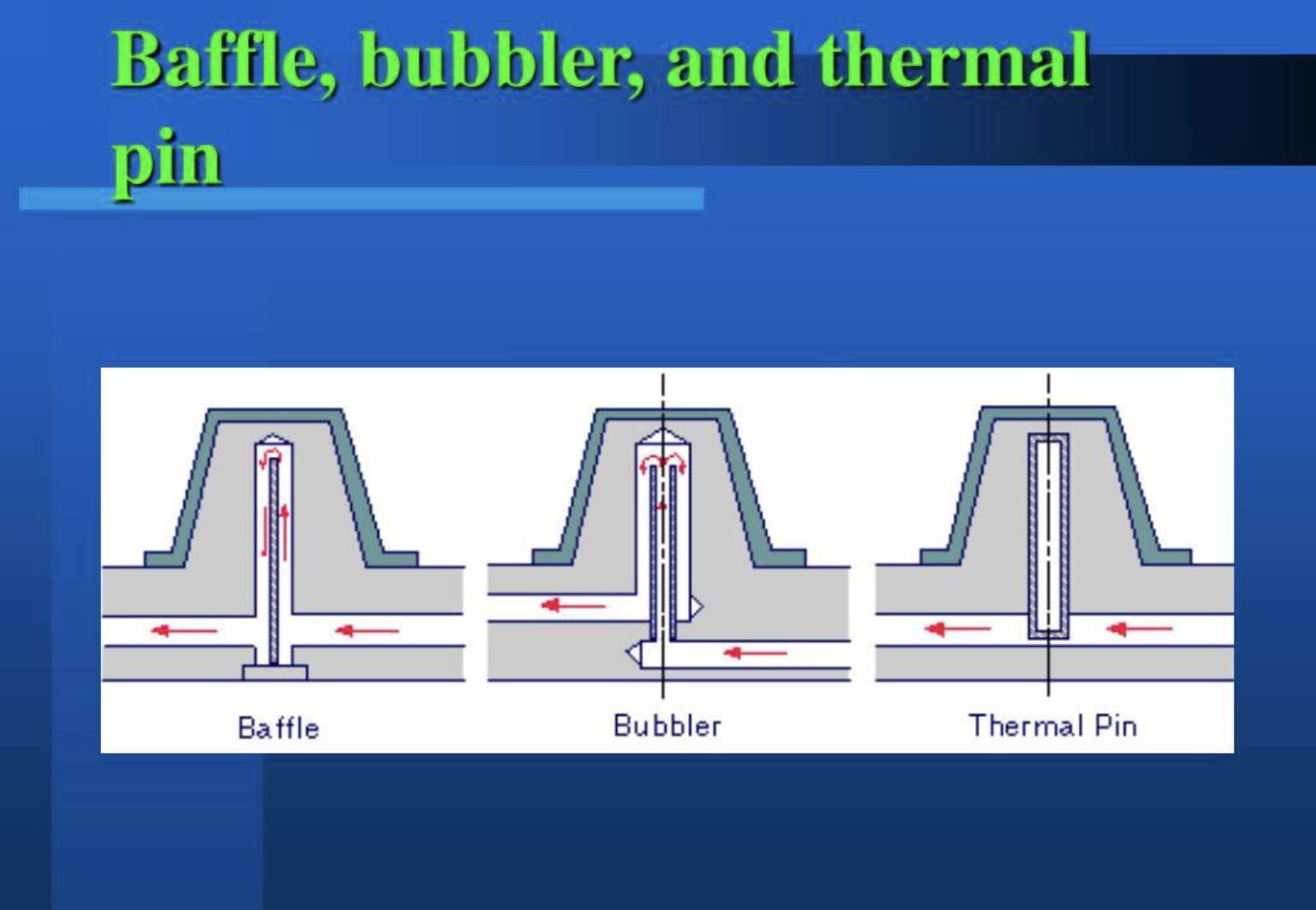
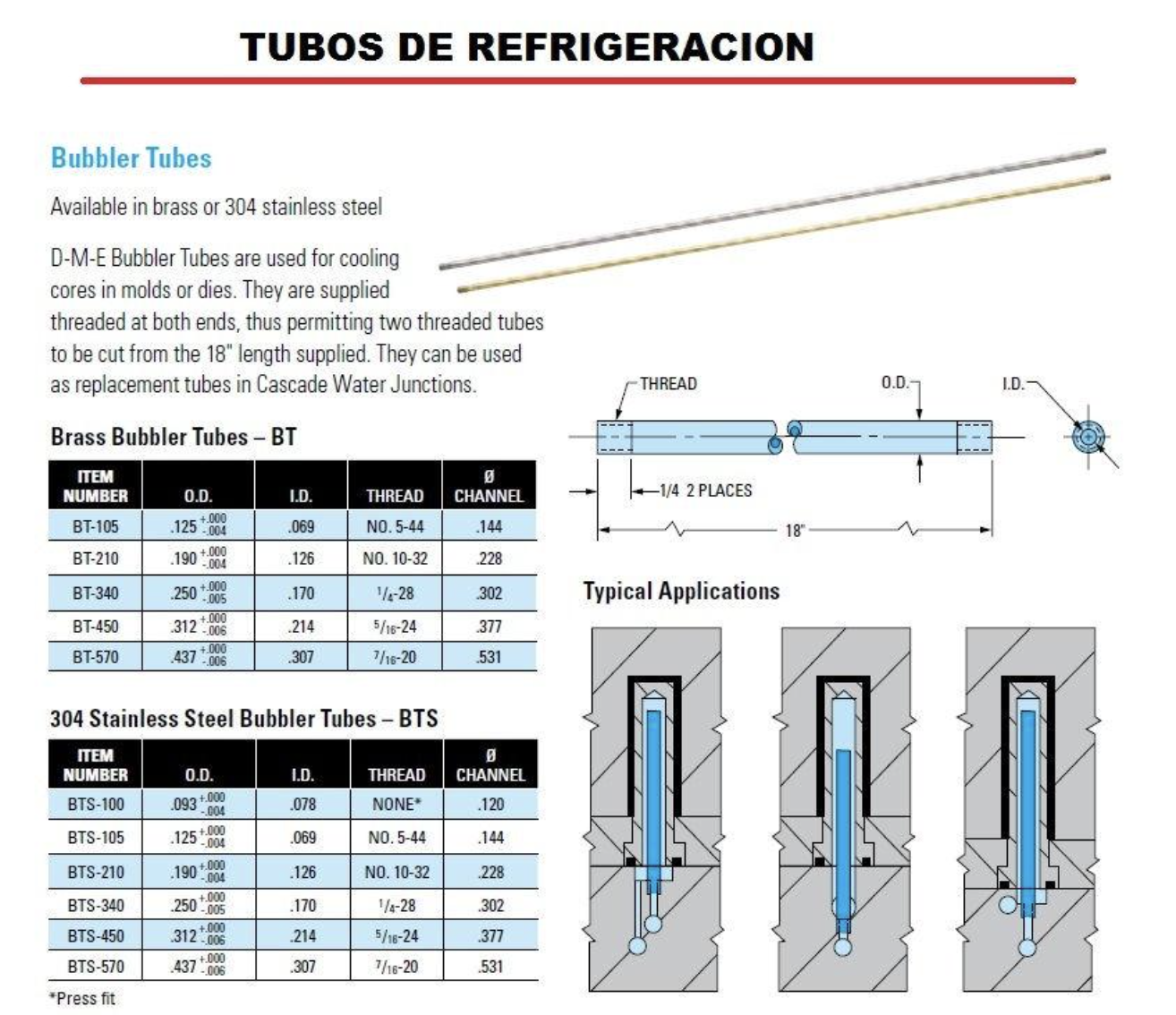
A Bubbler is a cooling structure that uses a small metal tube installed inside a larger drilled hole.
Unlike a Baffle, which uses a flat metal blade, a Bubbler uses a tubular structure to separate the incoming and returning coolant.
How does it work?
In a common Bubbler configuration:
Cold water enters through the inside of the small tube.
It travels toward the bottom of the drilled hole, reaching the deeper area of the mold.
The coolant exits the tube and changes direction.
It flows back through the annular space between the tube and the drilled hole.
The heated water returns to the main cooling circuit.
The key feature is that the incoming and returning coolant travel through two separate passages.
This allows cooling water to reach deep areas, particularly inside slender mold cores.
Why use a Bubbler?
Bubblers are particularly effective for cooling slender cores and deep, narrow sections where conventional cooling channels are difficult to position.
They are also useful in certain flat mold sections where drilled or milled cooling channels cannot be easily incorporated.
Compared with a Baffle, a Bubbler can provide a more practical solution for relatively long and narrow cooling passages.
However, its design also requires attention:
Tube diameter: The tube must provide sufficient internal flow capacity.
Annular clearance: Enough space must be maintained between the tube and the surrounding hole for returning water.
Flow resistance: Both the internal and external passages must be designed to avoid excessive pressure loss.
Tube end clearance: The end of the tube must allow coolant to exit without obstruction.
An undersized return passage can restrict water flow and reduce cooling performance.
4. Baffle vs. Bubbler: What Are the Main Differences?
Although both systems serve a similar purpose, their physical structures and coolant flow paths are different.
Comparison | Baffle | Bubbler |
Main component | Metal blade | Metal tube |
Structure | Divides one hole into two passages | Creates inner and outer passages |
Coolant flow | Along both sides of the blade | Through the tube and surrounding annular passage |
Typical application | Deep cooling passages | Deep and slender cores |
Main design concern | Blade rigidity and flow restriction | Tube diameter and annular clearance |
The most important difference is how the coolant is guided.
A Baffle uses a metal blade to divide a cooling passage, while a Bubbler uses a tube to deliver coolant into a deeper region before returning it through the surrounding passage.
Neither solution is universally better. The appropriate choice depends on the core geometry, available space, cooling requirements, water flow, and manufacturing conditions.
5. When Should You Choose a Baffle or a Bubbler?
The decision should always start with the mold geometry and the actual cooling requirements.
Here are some general guidelines:
Consider a Baffle when:
The mold has a relatively deep cooling passage.
A blade can be installed with sufficient rigidity.
The available space allows adequate flow passages on both sides.
The cooling circuit can be arranged conveniently using a drilled hole.
Consider a Bubbler when:
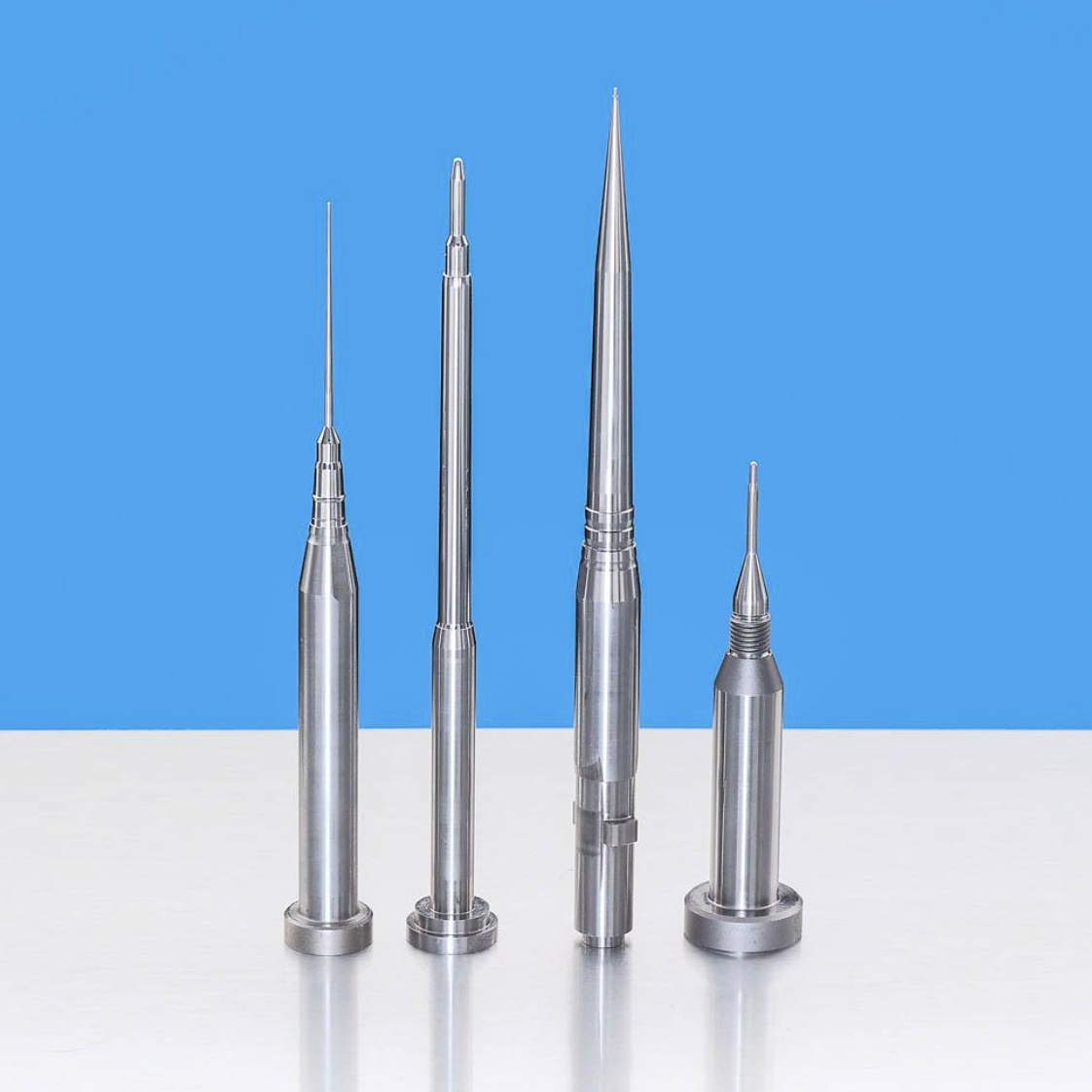
The mold contains long and slender core pins.
Cooling water needs to reach a relatively deep location.
A tubular structure is more practical than a thin metal blade.
The available space allows sufficient clearance for both incoming and returning coolant.
As a general design reference, Autodesk Moldflow indicates that Bubblers are often preferred when the cooling passage length exceeds approximately 15 times its diameter, because very long thin Baffle blades can lose rigidity.
This is a design guideline rather than an absolute rule. The final selection should consider the complete cooling circuit and its operating conditions.
6. Important Design Considerations for Both Systems
Regardless of whether a Baffle or Bubbler is selected, several engineering factors should be carefully evaluated.
1. Coolant Flow Rate
The cooling system must provide sufficient coolant flow to remove heat effectively. Simply installing a Baffle or Bubbler does not guarantee better cooling.
2. Pressure Drop
Both structures reduce the available flow area compared with a conventional straight cooling channel. Excessive pressure loss may reduce the actual coolant flow rate.
3. Cooling Uniformity
The objective is not only to cool one specific location, but also to maintain a reasonably balanced temperature distribution across the mold.
4. Maintenance and Water Quality
Cooling channels can accumulate scale, rust, or other deposits over time. Narrow passages are particularly sensitive to blockage, so water quality and maintenance should not be overlooked.
5. Cooling Analysis
For more complex molds, cooling analysis can help evaluate coolant flow, pressure loss, temperature distribution, and potential hot spots before the mold is manufactured.
7. Final Thoughts: Good Mold Cooling Starts with Good Engineering
Baffles and Bubblers are two practical solutions for improving cooling in areas that conventional straight cooling channels cannot effectively reach.
A Baffle uses a metal blade to guide coolant through a U-shaped passage, while a Bubbler uses a tube to deliver coolant into deeper areas and return it through the surrounding annular passage.
Both can contribute to better cooling performance when properly designed and applied.
At OPRO Tech Engineering, we believe that effective mold cooling starts with understanding the product geometry, identifying potential hot spots, and selecting the right cooling structure for each application.
Because in injection molding, a well-designed cooling system is not just about removing heat. It is about achieving better part quality, more stable production, and a more efficient manufacturing process.
Have a challenging mold cooling design?
Our engineering team would be happy to discuss your project and explore practical cooling solutions.
OPRO Tech Engineering – LET MANUFACTURING INNOVATE THE FUTURE.